Faculty of Technology - FT | Department of Mechanical Engineering – ENM | Postgraduate Program in Mechanichal Science – PCMEC
Fluid Mechanics of Complex Flows Research Group – Vortex
Laboratory of Microhydrodynamics and Rheology – Micro-Reo | Laboratory of Scientific Computing in Complex Flows – LCEC

SOME RESEARCH FOCUS


Microhydrodynamics and Rheology of Complex Fluids


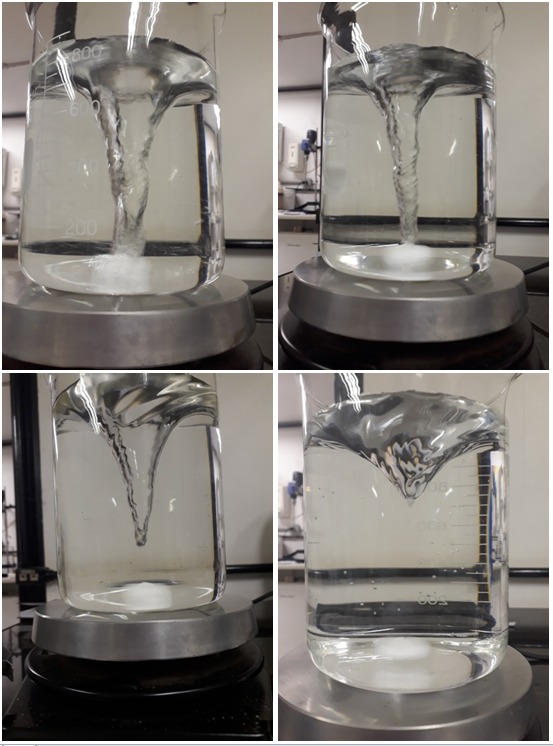
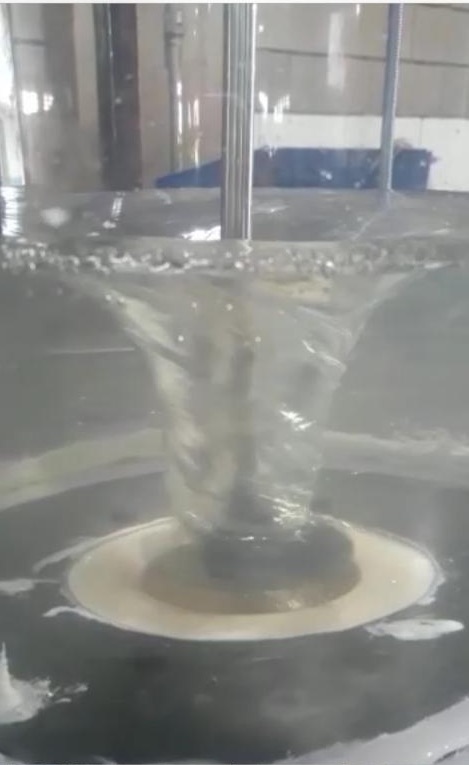

The primary focus of my research is the investigation of microscopic and macroscopic models of particulate systems, particularly those with direct physical applications, including: neutrally-buoyant and sedimenting suspensions, emulsions, granular materials, magnetic suspensions, fluidized beds and colloidal systems. The general themes of my research are: Micro-Hydrodynamics, Micro-Mechanics and Rheology of Complex Fluids, Fluctuations and Hydrodynamic Dispersion in Suspensions, Stability of Fluidized Beds, Drag Reduction in Flows, Bubble Dynamics, Perturbation Methods in Fluid Mechanics, Hydrodynamic of Magnetic Fluids, Stochastic Processes in Mechanical Science.

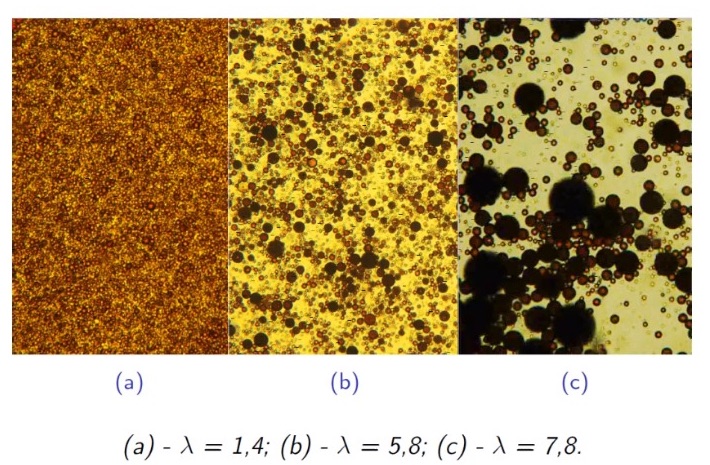
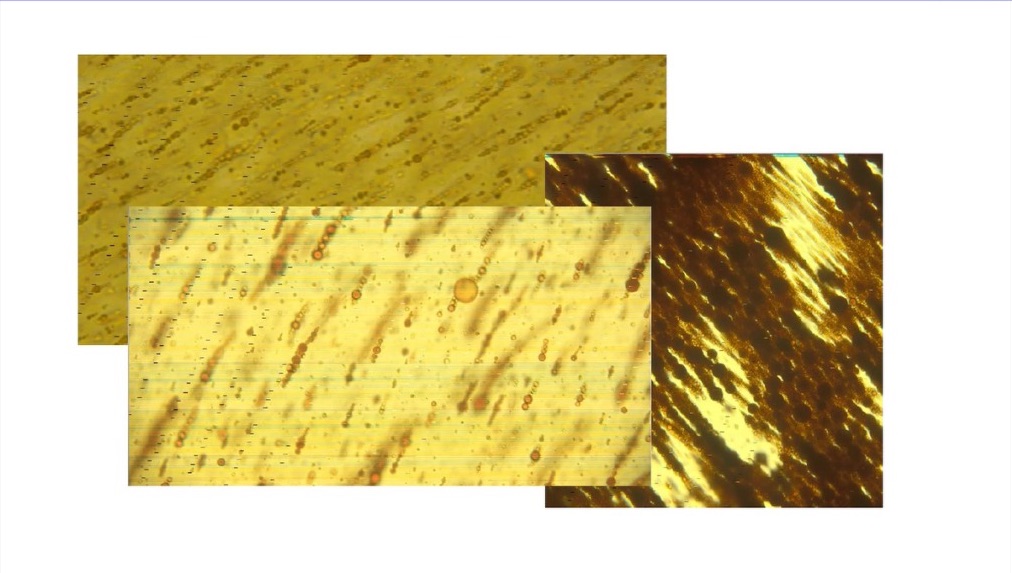

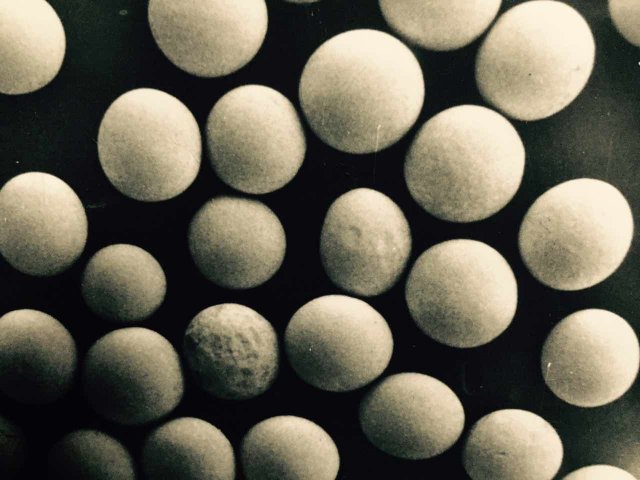

Magneto-rheological fluids consist of suspensions of colloidal particles. Each particle contains many tiny, randomly oriented magnetic grains that can be oriented into chains by an externally applied magnetic field. These chains may further coalesce into larger-scale structures in the suspension, thereby dramatically increasing the viscosity of the suspension. This increase, however, may be totally reversed when magnetic field is turned off.
Living Fluids
The pioneering work on this subject was done by GI Taylor (1951). After that, a considerable progress on locomotion and propulsion motion of small living particle in suspension was made by several autors (e.g. Lighthill, 1975; Brenner and Winet, 1977; Childress, 1981 and more recently by Koch and Subramanian, 2011). This area could be called microhydrodynamics of living fluids.
During part of the Ph.D thesis (2015-current) of my graduate student Sara Malvar we focus on the collective effect of the self-locomotion of Nematodes suspended in a viscoelastic fluid. The self-locomotion of C. Elegans (see short video) is an amazing example of an undulatory propulsion along a small living regular body. The propulsion motion in the direction of the nematode body is produced by muscular contraction waving from side to side and bending so that a wave propagates backwards behind the animal. The shape of the wave depends on the ambient fluid, but it is often approximately planar sinusoidal. The length of the nematode includes only one or two wavelengths. We also quantify the
deviation of stationary wave condition in the nematode body relative to the ground by the ratio U/Uc, where U is the propulsion velocity of the nematode and Uc is the wave velocity relative do the head of the nematode. Gravitacional and inertial effects are neglected because the nematodes are neutrally buoyant and too small (typically 500 micros).
We investigate experimentally the bulk-collective (averaged over about 100 individuals at different realizations), self-locomotion effects with nematodes interacting hydrodynamically in a viscoelastic fluid (e.g. an agar gel suspension), for different volume fractions of the living particles and the macromolecules in the ambiente fluid. We characterize nematode size distributions, its average frequency, and the wavelength of the traveling waves produced by muscular contraction down the nematodes relative cylindrical body. In addition, the average body curvature and the average propulsion velocity over a collection of the small nematodes (size ranging between 100 to 500 micros) under conditions of low Reynolds number and high Peclet hydrodynamics are also determined. The body-nematodes bending (muscular waves) effect on its self-propulsion is also observed and characterized. Scaling arguments based on balances of viscous, bending and elastic forces are also explored in this research. The rheology of the active suspension undergoing oscillatory shear of small and moderate amplitudes is largely explored regarding the viscous and elastic effects of the active particle collective motion. We conjecture that the disturbance velocity produced by the hydrodynamic interactions between the nematodes developing a self-propulsion motion will induce an extra stress (Batchelor’s stresslet) and rotation on the nematodes. The problem will exhibit coupling motions of different time and length scales. Questions are: How the small nematodes will react under influence of the hydrodynamic induced disturbances promoted by the neighboring living particles in a viscoelastic fluid? How their self-locomotion dynamics and configuration will be changed by the induced rotation and stress acting on them. Certainly this is a great subject to be explored as a topic of a PhD thesis – on fluid mechanics of living suspensions.
ABOUT PROF. FRANCISCO R. CUNHA
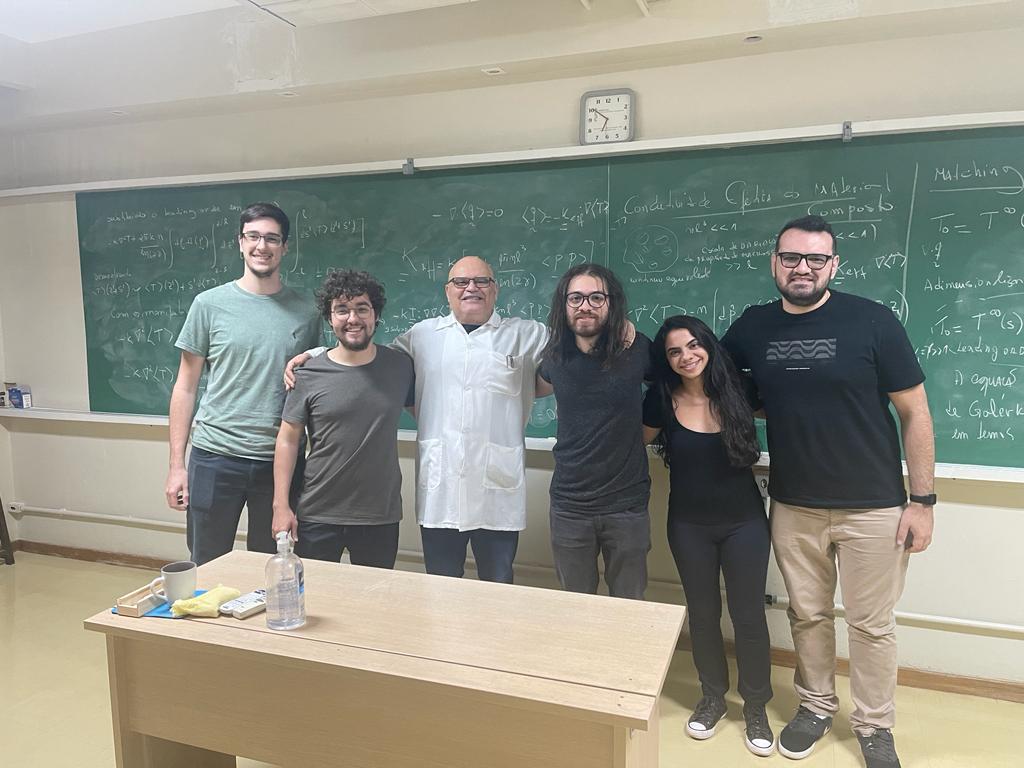
FRC is a Professor of Fluid Mechanics and Applied Mathematics in the Department of Mechanical Engineering at University of Brasília. He is also a researcher of CNPq-Brazil. He was one of the pioneers in Brazil of research on hydrodynamics of active magnetic suspensions, including particle velocity fluctuations and shear induced hydrodynamic dispersion. He founded the area of Microhydrodynamics and Rheology of active and passive complex fluids (e.g. magnetic suspensions, emulsions, elastic fluids, living fluids) at the University of Brasília – Brazil. He has supervised and guided several undergraduate and graduate students who are currently researching, advising and (or) working in that area at UnB itself and at other institutions, including companies and industry in Brazil and abroad. This Professor is the scientist leader of the Fluid Mechanics of Complex Flows Group and the Microhydrodynamics and Rheology LAB at University of Brasilia. His current research interests include: rheology of complex fluids; hydrodynamic of magnetic fluids, non-Newtonian fluid dynamics, microhydrodynamics of active and passive particles in suspensions; and mechanics of mobile suspensions in general. His research is highly interdisciplinary.
Rheological characterization of complex fluids
Education and Formation
Postdoctoral Fellowship and Visiting Associate Professor
Applied Math., University of California in Santa Barbara – USA, 2013-2013
Research topic: Mathematical Models for Magnetic Fluids
Research Collaboration with Prof. Hector D. Ceniceros
Postdoctoral Fellowship and Visiting Associate Professor
Chemical Engineering, Yale University, USA, 1998-2000
Research topic: Rheology of emulsion flows
Research advisor: Prof. Michael Loewenberg
Ph.D.
Applied Mathematics, University of Cambridge, UK, 1991-1995,
Robinson College – DAMTP – Department of Applied Mathematics and Theoretical Physics. Complex Fluid Group – Microhydrodynamics – (G.K. Batchelor, E.J. Hinch and J.M Rallison)
Thesis title: Hydrodynamic dispersion in suspensions
Advisor: Prof. John Hinch, FRS
M.Sc.
Mechanical Sciences, University of Brasília, Brazil, 1987-1989
Dissertation title: Nonlinear mechanisms in fluidized beds.
Advisor: Prof. Antônio F. Parentes Fortes
B.S.
Mechanical Engineering, University of Brasília, Brazil, 1981-1986
Academic Links
- Plataform Lattes-CNPq – Link: FRC Lattes
- Academic Google – Link: FRC Citations
- WebGroup System-CNPq – Link: Group VORTEX
Fluid Mechanics Videos by VORTEX Group
• Video 1: Instability of a Magnetic Fluid, by Cunha, F.R. & Abade, G.C., 2002.
• Video 2: The amazing self-locomotion of nematodes. See also PART II: Microhydrodynamics of Living Suspensions. These videos have been made during the current investigations of my Ph.D student Sara Malvar (2015-current).
• Video 3: Microhydrodynamics of a single drop, by Cunha, F.R. & Dias, N.J., 2013
• Video 4: A Model of Magnetic Separation Oil-Water, by Cunha, F.R. & Sobral, Y.D., 2004
• Video 5: Thermo-Magnetic Convection, by Gontijo, R.G. & Cunha, F.R., 2011. (Presented in the 6th Internacional Conference on Surfaces, Coatings and Nano-Structured Material -NANOMAT Conference – Krakow – Poland – 2011).
• Video 6: SUP – Stand up Paddle Fluid Mechanics (Hydrostatic and Dynamic – drag and lift).
• Video 7: Talk of Prof. Hinch on the Flow of Elastic Liquids, (Opening talk of COBEM2007-Brazil)
Résumé – FRC
Prof. F. R. Cunha is a Professor of Fluid Mechanics in the Department of Mechanical Engineering at the University of Brasília (UnB), Brazil. He holds a B.Sc. in Mechanical Engineering (1986) and an M.Sc. in Mechanical Sciences (1989) from UnB, and a Ph.D. in Applied Mathematics and Fluid Mechanics from the University of Cambridge (1995), where he worked in the Complex Fluids Group led by Prof. G. K. Batchelor. He completed a postdoctoral fellowship at Yale University (1998–1999) and served as a Visiting Associate Professor at the same institution. He has also held visiting positions at the University of California, Santa Barbara (2013) and at UnB (1995). Prof. Cunha is a pioneer in Brazil in the field of complex fluid hydrodynamics, particularly in active magnetic suspensions. He founded the research area of Microhydrodynamics and Rheology of complex fluids at UnB and established the Laboratory of Microhydrodynamics and Rheology. He currently leads the Fluid Mechanics of Complex Flows Group (VORTEX). His research focuses on rheology of complex fluids, non-Newtonian fluid dynamics, hydrodynamics of magnetic fluids, and microhydrodynamics of particle suspensions. His work is interdisciplinary and has contributed significantly to the understanding of shear-induced hydrodynamic dispersion and particle migration in suspensions. Prof. Cunha has been a CNPq research fellow since 1996 and a Level 1 PQ fellow since 2005, with a current grant covering 2025–2029. He has served as Coordinator of the Graduate Program in Mechanical Sciences at UnB (2002–2004), contributing to its creation. He has also served on advisory and evaluation committees for CNPq and FAPDF and acts as a consultant for major Brazilian funding agencies. He was Associate Editor (2005–2015) and Editor-in-Chief (2015–2019) of the Journal of the Brazilian Society of Mechanical Sciences and Engineering and is currently a member of its advisory board. Prof. Cunha has authored around 90 peer-reviewed papers in leading journals, including Journal of Fluid Mechanics, Physics of Fluids, and Rheologica Acta. He has supervised numerous undergraduate, graduate, and postdoctoral researchers, many of whom now hold academic and professional positions in Brazil and abroad. His widely cited work on hydrodynamic dispersion in suspensions has had lasting impact in the study of suspensions and emulsions, particularly in predicting the migration of particles, droplets, capsules, and biological cells.
LABORATORY OF MICROHYDRODYNAMICS AND RHEOLOGY
MICRO-RHEO – VORTEX / UnB
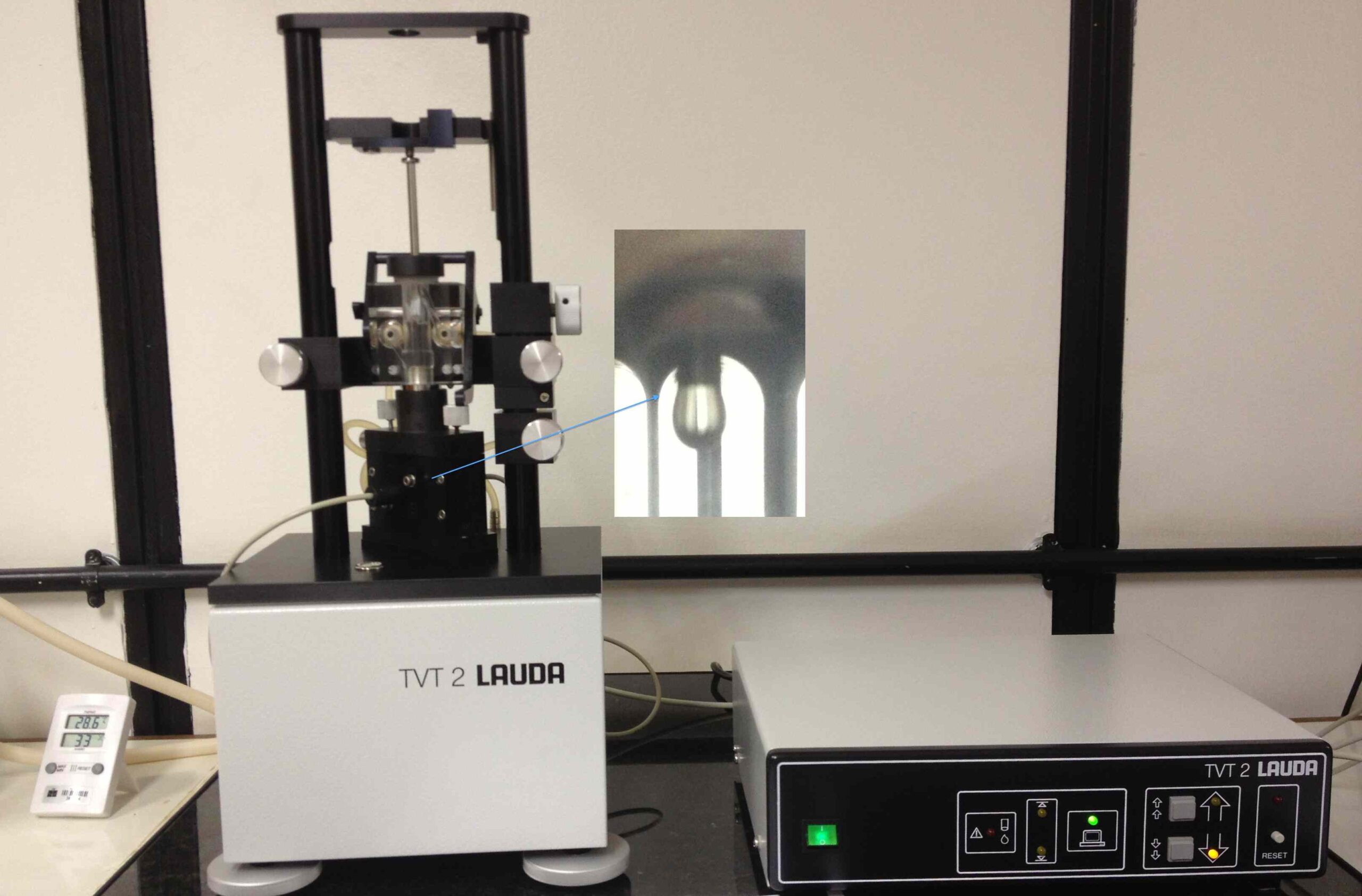


O foco principal da pesquisa desenvolvida no Laboratório de Microhidrodinâmica e Reologia (MICRO-RHEO) é a caracterização reológica de fluidos complexos baseada em análise microscópicas e macroscópicos de sistemas fluidos particulados, particularmente, daqueles fluidos com aplicações tecnológicas. A saber: suspensões em cisalhamento, suspensões em sedimentação, emulsões viscosas, suspensões magnéticas, leitos fluidizados e sistemas coloidais e não-coloidais em geral. Atualmente, o MICRO-RHEO tem realizado trabalhos experimentais referentes a caracterização reológica de fluidos magnéticos. Fluidos estes que podem ser tanto suspensões de estruturas magnéticas não-coloidais (i.e. maiores que 10 micros) como também ferrofluidos contínuos nos quais as partículas são menores que 10 nm. No caso das suspensões de partículas micrométricas magnéticas, compósitos magnéticos ou aglomerados (i.e. suspensão magneto-reológicas), cada estrutura magnética contém um número de pequenas partículas nanoméricas com dipolos orientados na forma de aglomerados ou cadeias por um campo magnético externo aplicado. As estruturas podem desenvolver um processo de aglomeração e formar estruturas ainda maiores, produzindo grandes variações na magnetização e na reologia dessas suspensões, dependendo da intensidade do campo externo aplicado. Os temas gerais de interesse e que fazem parte das atividades de pesquisa do Lab MICRO-RHEO são: microhidrodinâmica, micro-mecânica e reologia de fluidos complexos, flutuações e difusão hidrodinâmica em suspensões não-Brownianas e hidrodinâmica de fluidos magnéticos em diferentes condições de campos externos de escoamentos (lineares e não lineares), transientes ou não-transientes. Vale ainda informar que o referido LAB iniciou suas atividades de pesquisa e formação de recursos humanos em 2010, a partir da constatação da necessidade da criação de um Laboratório de pesquisa com foco no estudo de problemas ligados a escoamentos de fluidos complexos e no consequente repasse dos conhecimentos gerados para o setor industrial. Com essa perspectiva o Micro-Reo passou também a explorar o desenvolvimento de procedimentos sistemáticos para o estudo de fenômenos em escoamentos de fluidos complexos, buscando sempre levar em conta aspectos microestruturais na resposta macroscópica do fluido.
Résumé – FRC (in Portuguese)
O Prof. F. R. Cunha possui graduação em Engenharia Mecânica pela Universidade de Brasília (UnB, 1986), mestrado em Ciências Mecânicas pela mesma instituição (1989) e doutorado em Matemática Aplicada e Mecânica dos Fluidos pela Universidade de Cambridge (DAMTP, 1995), onde integrou o Grupo de Fluidos Complexos, então liderado pelo Prof. G. K. Batchelor. Realizou estágio de pós-doutorado na Universidade de Yale (1998–1999), onde também atuou como Professor Associado Visitante. Em 2013, foi Professor Visitante no Departamento de Matemática da Universidade da Califórnia, Santa Bárbara (UCSB). Anteriormente, em 1995, foi Professor Visitante no Departamento de Matemática da UnB. O Prof. Cunha é pioneiro no Brasil na área de hidrodinâmica de suspensões magnéticas ativas e de fluidos complexos. Suas contribuições incluem estudos fundamentais sobre flutuações de velocidade de partículas não brownianas e dispersão hidrodinâmica induzida por cisalhamento. Na Universidade de Brasília, fundou a área de Micro-hidrodinâmica e Reologia de fluidos complexos ativos e passivos, onde também criou o Laboratório de Micro-hidrodinâmica e Reologia. Atualmente, lidera o Grupo de Mecânica dos Fluidos de Escoamentos Complexos (VORTEX). Seus interesses de pesquisa incluem reologia de fluidos complexos, hidrodinâmica de fluidos magnéticos, dinâmica de fluidos não newtonianos e micro-hidrodinâmica de suspensões de partículas ativas e passivas. Sua atuação é fortemente interdisciplinar. Atualmente, é Professor de Mecânica dos Fluidos no Departamento de Engenharia Mecânica da UnB, onde desenvolve atividades de ensino na graduação e pós-graduação, além de pesquisa. Foi Coordenador do Programa de Pós-Graduação em Ciências Mecânicas (2002–2004), tendo desempenhado papel fundamental em sua criação e implementação. Atuou como Editor Associado do Journal of the Brazilian Society of Mechanical Sciences and Engineering (2005–2015) e como Editor-Chefe (2015–2019). Atualmente, integra o conselho consultivo da revista (Springer). O Prof. Cunha é autor de aproximadamente 90 artigos científicos revisados por pares em periódicos internacionais de destaque, incluindo Journal of Fluid Mechanics, Physics of Fluids, Journal of Non-Newtonian Fluid Mechanics, Rheologica Acta, Physica A, Biomicrofluidics, Powder Technology e International Journal of Multiphase Flow, entre outros. Orientou diversos estudantes de iniciação científica, mestrado, doutorado e pós-doutorado, muitos dos quais atualmente atuam em instituições acadêmicas e no setor produtivo, no Brasil e no exterior. Grande parte de sua produção científica foi desenvolvida em colaboração com seus alunos na UnB. É revisor ativo de diversos periódicos de alto impacto, incluindo Journal of Fluid Mechanics, Physics of Fluids, Soft Matter e AIChE Journal. Também é membro do INCT-NANO/CNPq e coordenou diversos projetos de pesquisa financiados por agências como CNPq e FINEP. O Prof. Cunha participou de numerosas comissões acadêmicas, incluindo bancas de defesa e concursos públicos. É membro da ABCM e da SBMAC, membro do Robinson College (Cambridge) e membro fundador da Sociedade Brasileira de Reologia (BSR, 2009). Suas contribuições seminais à teoria da dispersão hidrodinâmica em suspensões têm sido amplamente citadas e aplicadas no estudo de suspensões e emulsões, especialmente na previsão da migração de partículas, gotas, cápsulas e células biológicas. A pesquisa do professor integra teoria fundamental, modelagem computacional avançada e investigações experimentais para abordar desafios contemporâneos em escoamentos de fluidos complexos.

